
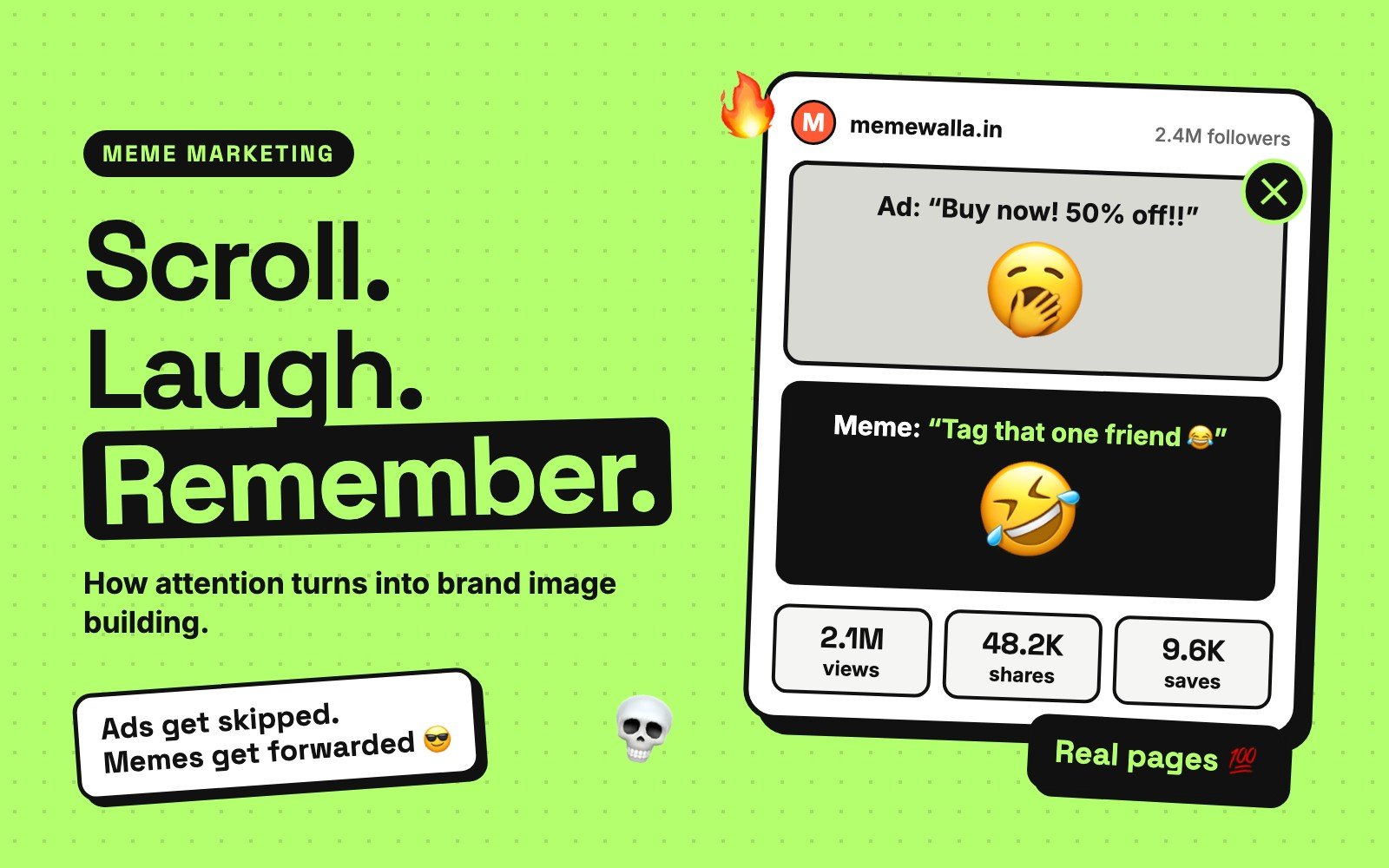
Modern consumers have developed severe banner blindness. Whether scrolling through Instagram Reels, LinkedIn feeds, or X threads, audiences scroll past polished corporate commercials and hard sales pitches in milliseconds. Yet, those very same consumers actively pause, laugh, tag friends, and forward relatable memes into their WhatsApp and Instagram group chats dozens of times a day.
For businesses trying to stand out in saturated digital markets, this shift in consumer attention is critical. Partnering with a specialized Meme Marketing Agency has evolved from an experimental social media tactic into a core pillar of long-term brand building. When executed with cultural intelligence and strategic restraint, memes transform faceless corporations into relatable, everyday voices that audiences genuinely trust and remember.
What Is Meme Marketing and Why Does It Matter for Brand Building?
Meme marketing is the strategic use of internet humour, trending cultural formats, and relatable visual references to communicate a brand’s perspective, values, or product relevance without sounding like an advertisement.
Unlike traditional performance marketing, which focuses on immediate clicks and conversions, brand building focuses on mental availability, emotional connection, and long-term recall. Memes accelerate all three because they operate on native social currency:
- Bypassing Ad Resistance: Audiences consume memes voluntarily as entertainment. Because the format mirrors what their friends post, it slips past psychological ad filters and earns genuine attention.
- Algorithmic Amplification: Social media algorithms prioritize shares, saves, and comment velocity over passive impressions. A single relatable meme often achieves 5x to 10x the organic reach of a standard branded graphic.
- Peer-to-Peer Social Proof: When a user forwards a brand’s meme to a friend or shares it on their story, they attach their own personal endorsement to your brand identity.
- Humanizing Corporate Identity: Customers rarely feel emotional loyalty toward sterile corporate messaging. Witty, self-aware humour gives your brand a distinct personality that feels approachable and human.
The Psychology Behind Viral Brand Recall
To build a lasting brand through humour, marketers must understand why people share memes in the first place. Behavioural psychology shows that sharing content online is driven by three primary triggers:
- Identity Signaling: People share memes that say, “This is so me” or “This reflects how I see the world.” When your brand creates that exact moment of recognition, consumers associate your name with their own self-identity.
- Shared Frustration and Relief: Lightheartedly poking fun at universal pain points, such as Monday morning stand-ups, traffic jams, slow Wi-Fi, or budget constraints, creates instant camaraderie between the brand and the buyer.
- Social Currency: Sharing a clever, timely joke makes the sharer look witty and culturally aware in front of their peer group. Brands that supply this social currency become indispensable fixtures in daily digital conversations.
Real-World Execution: Lessons from Winning Campaigns
From hands-on experience running high-velocity social campaigns across diverse Indian industries, we have seen that viral brand building is never accidental. A seasoned Meme Marketing Agency in Delhi does not simply copy trending templates; it maps cultural moments directly to brand positioning.
Consider how leading brands in India execute meme marketing across distinct strategic pillars:
| Strategy Pillar | Execution Approach | Brand Building Outcome | Real-World Indian Context |
|---|---|---|---|
| Moment Marketing (Trend-Jacking) | Reacting within hours to cricket matches, Bollywood releases, viral dialogues, or major cultural events. | Establishes the brand as alert, energetic, and culturally plugged-in. | Food delivery apps tweeting witty one-liners within minutes of a last-over IPL thriller. |
| Pain-Point Relatability | Highlighting everyday customer struggles tied subtly to your category without hard-selling features. | Builds deep emotional empathy (“This brand understands my real life”). | Fintech and edtech brands joking about salary-day splurges or exam-night procrastination. |
| Self-Deprecating Wit | Playfully acknowledging common industry stereotypes, pricing objections, or minor brand quirks. | Disarms consumer skepticism and signals high brand confidence. | D2C skincare or SaaS brands joking about users abandoning carts at midnight. |
| Community Inside Jokes | Creating recurring visual themes or niche industry humour tailored specifically to power users. | Turns passive followers into an engaged, loyal brand community. | B2B SaaS companies turning developer bugs or client revision requests into episodic memes. |
The 5-Step Framework to Build a Brand Through Memes
Running a single viral post creates a temporary spike in impressions, whereas a repeatable system builds lasting brand equity. Follow this five-step execution framework to ensure every meme strengthens your market positioning:
1. Define Your Brand’s Humour Guardrails
Not every brand should sound like a stand-up comedian. Before publishing, establish clear boundaries around tone, vocabulary, and off-limit topics. A B2B cybersecurity brand might lean toward dry, observational wit, whereas a youth fashion label can embrace bold, chaotic Gen Z slang.
2. Build a Rapid Cultural Listening Workflow
Internet trends operate on a 24-to-72-hour lifecycle. Assign dedicated creative scouts to monitor Reddit threads, Instagram Reels audio trends, X conversations, and regional pop culture daily. If a trend takes five days of corporate committee approvals, it is already stale by the time it goes live.
3. Follow the 80/20 Value-to-Brand Rule
Eighty percent of your meme’s focus should be pure entertainment, relatability, or cultural commentary. Only twenty percent should tie back to your brand or product category. When the joke itself is genuinely funny, audiences willingly accept the subtle brand tie-in.
4. Keep Branding Clean and Non-Intrusive
Slapping a giant company logo across the center of a meme immediately destroys its shareability because users feel like free billboards. Instead, place a clean, minimal watermark in the corner and use the post caption to reinforce your brand voice or product context naturally.
5. Amplify Winning Organic Posts
When a meme crosses your organic engagement benchmark within the first few hours, put modest paid media behind it. Promoting content that has already proven its organic appeal lowers cost-per-engagement drastically while introducing your brand personality to cold audiences at scale.
Common Meme Marketing Mistakes That Damage Brand Trust
While great meme marketing builds massive affinity, poorly executed humour can backfire just as quickly. Avoid these four pitfalls that erode brand authority:
- Misusing Established Templates: Every internet meme format carries strict unspoken rules and emotional subtext. Altering a template’s core meaning just to force a product mention signals to savvy audiences that your brand does not understand internet culture.
- Forcing Relevance on Sensitive Topics: Jumping onto tragedies, political controversies, or sensitive social issues for cheap engagement damages brand credibility permanently.
- Using Outdated References: Posting a meme format from six months ago makes a brand look disconnected rather than youthful. Always verify whether a trend is peaking or already declining before publishing.
- Over-Selling in the Punchline: If the punchline reads like a promotional brochure (“And that is why you should buy our 20% off subscription today!”), audiences will scroll away immediately and ignore future posts.
How to Measure Brand Building ROI from Meme Marketing
Because memes sit primarily at the top and middle of the marketing funnel, judging them solely on immediate last-click sales misses their true commercial value. Track these four core metrics to evaluate brand growth accurately:
- Share-to-Impression Ratio: Shares are the strongest indicator of emotional resonance. A high share rate proves your content is actively travelling through private networks and WhatsApp groups.
- Save Rate: High saves indicate that audiences want to revisit your post or show it to someone later, signaling strong content affinity.
- Branded Search Volume Lift: Sustained meme campaigns consistently drive measurable increases in direct Google searches for your brand name over 60 to 90 days.
- Comment Sentiment and Community Tagging: Track how often followers tag friends in your comments or praise the brand’s admin in the replies, as this reflects authentic brand warmth.
Turning Cultural Relevance into Lasting Brand Equity
Attention is the scarcest currency in modern marketing, and audiences no longer give it away to brands that only talk about themselves. By meeting consumers with timely wit, cultural fluency, and genuine relatability, meme marketing turns everyday scrolling moments into meaningful brand connections.
Whether you are launching a fast-growing D2C startup, refreshing a legacy enterprise, or scaling a B2B platform, partnering with the Best Meme Marketing Agency gives you the creative speed, cultural insight, and strategic discipline needed to turn viral moments into long-term brand equity.